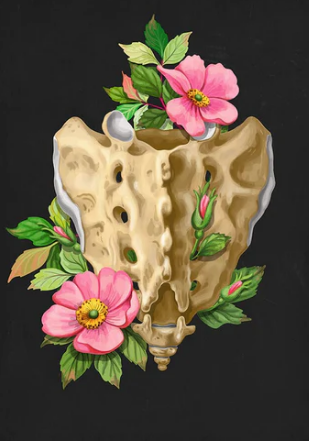
The sacrum bone, along with the coccyx, is the root of our body. This area supports the weight of the entire spinal column and head, and everything that hangs off of our spinal column–organs, muscles, ribs, etc…What a supporter! The sacrum also connects us to the energy of the Earth below, rooting us into this human body and our life’s potential.
A relaxed and balanced sacrum is rare. Modern life challenges healthy flow in this area. Excessive sitting in chairs, driving cars, and walking on concrete are common impacts that impair sacral vitality. Hard falls can displace the sacrum for a lifetime in a moment. Sexual trauma lodges in the sacral area. Fear and chronic anxiety freeze up the sacrum over time, in a subconscious body response similar to a dog tucking its tail in. In contrast, a happy sacrum is aligned with a feeling of security, stability, and trust in life.
In fact, sacrum means sacred, or holy place, in Latin. Held inside the embrace of the sacrum are the reproductive organs, the sacred place of creation of all of our bodies. Also held by the sacrum are the sigmoid colon and bladder, whose jobs are the final stage of expelling what we do not need from our life-giving food, water, and cellular processes. The sacrum itself is cradled between the two pelvic bones, known as ilias. The nerves that emerge from the holes in the sacrum enervate the pelvic region and the legs.
The Craniosacral approach to releasing the sacrum from tension is gentle and comforting. Instead of forcing the sacrum into place, the sacrum is held and allowed to relax between the hip bones. Sacral release is a much needed “aaahhhhhh” for the nervous system, a sensation that your body might remember from being cradled as a baby. Cradling the sacrum of an adult nurtures all the pain and trauma that might be stored there since being a child.
The sacrum needs to be released from tension for the rest of the spine to release, especially the neck and head. The membrane surrounding the brain and spinal cord attaches inside the sacrum and again inside the top vertebrae of the spine before entering the skull. Therefore, if only one end of this attachment is released, the remaining tension in the other end will easily pull everything out of place again. This is why the sacrum is given great respect in the name of CranioSacral Therapy, and is an important aspect of this work.